
|
Recent Articles
| Image | Title & Summary |
|---|---|

|
Kansas town is getting an underground nuclear reactor and splits the townspeople
The so-called Gravity Reactor is being proposed by a California-based start-up company from a father-daughter duo, Liz Muller and Richard Muller Removed from bookmarks A pilot project to bury a nuclear reactor one mile underneath a town in Kansas has split the opinion of local residents, with some fearing the environmental impacts while others hope it will create economic opportunities. The so-called Gravity Reactor is being proposed by Deep Fission, a California-based start-up from a father-daughter duo, Liz Muller and Richard Muller, emeritus professor of physics at University of California, and an inventor. It will be the first time a commercial nuclear reactor operates underground. The s… |

|
Lindsay Clancy breaks down in tears when the 911 call of her husband She killed the kids is played
Over the course of several interviews, Patrick Clancy has expressed his willingness to forgive his ex-wife, whom he considers to be unwell rather than malevolent. On Wednesday, Lindsay Clancy broke down in tears in court as the jury listened to the approximately seven-minute 911 call that her husband made after returning to an unusually quiet home, only to discover that she had strangled their three children. According to the prosecution, she had asked Patrick Clancy to make a quick trip to a pharmacy to pick up some prescription and take out some food. However, the prosecution claims that this request was nothing more than a pretext to get him out of the house. During the time that the jury… |

|
Man who stabbed author Salman Rushdie convicted of terrorism charges
After being found guilty of federal "terrorism" charges, a man who is already serving a jail sentence in New York for attempting to assassinate novelist Salman Rushdie is now facing the risk of spending the rest of his life behind bars. A knife attack on Salman Rushdie in 2022, which took place during a public engagement in New York, led in Rushdie being half blind. Hadi Matar, who is now 28 years old, is currently serving a sentence of 25 years for his crime. In May of the previous year, Matar was given a sentence of twenty-five years in prison. A New York jury found Matar guilty on all charges, including an effort to offer material support to Hezbollah in Lebanon, after deliberating for tw… |

|
The World Cup plan is merely a proposal and not an obligation
FIFA President Gianni Infantino has called the plan to sell ownership in the World Cup a proposal but said it is "not an obligation," following a significant criticism from several football authorities. FIFA this week said it planned to create a $20 billion subsidiary to run the World Cup and other events, and would sell up to 20% of the subsidiary to outside investors. The proposal was heavily criticized by the sport’s regional confederations, which said they were surprised by FIFA’s plan to incorporate commercial investors in the sport. The commercial side of the game has to grow." "It is a natural growth of the game," Mr Infantino said. “It’s part of a democratic process—a consultation pr… |

|
Stanford Godmother of AI Launches Spatial Intelligence MasterClass
MasterClass, the personalized learning platform, has announced the launch of Dr. Fei-Fei Li: AI’s Future – and Yours, a class that covers the current state of AI development, its real-world applications and the role individuals can play in influencing how the technology evolves. Known as the “Godmother of AI,” Li is a Stanford professor, cofounder and CEO of World Labs and founding director of Stanford’s Human-Centered AI Institute. Her foundational research on ImageNet helped spark the deep learning revolution behind every AI product in use today. The class is available now on MasterClass, where members have unlimited access to 200+ instructors with an annual membership. The class begins wh… |

|
How OC Innovators Are Winning the Last Mile of Artificial Intelligence
For years, the artificial intelligence conversation was dominated by a handful of technology giants investing billions into massive data centers, specialized chips and large language models. But a different story is unfolding in Orange County, where a growing wave of “AI-native” startups is proving that innovation doesn’t always require building the foundation models themselves. Instead, local entrepreneurs are focusing on what many industry observers call the “last mile” of AI: applying increasingly accessible open-source and commercial AI models to solve highly specific business problems. The result is a surge in enterprise workflow automation and industry-specific AI applications that are… |

|
Why is Iran bombing Gulf states while avoiding US naval assets and Israel
As the United States escalates its strikes on Iran, Tehran is hitting back, targeting military and civilian infrastructure across the Gulf states and Jordan while avoiding attacks on US naval assets deployed near its coast and on Israel – a strategy that analysts say is intended to pressure US President Donald Trump without expanding the scope of the war. While Washington has struck railway stations, power facilities, telecommunications networks and drinking-water infrastructure in Iran, the Islamic Revolutionary Guard Corps (IRGC) has responded by attacking civilian airports and water and power stations in Kuwait and Bahrain. Military analysts said there’s a logic to this strategy. Targetin… |

|
Do not believe Andy Burnham and his PR machine
On Monday, former Mayor of Manchester Andy Burnham is officially stepping into office as British prime minister after public pressure forced Keir Starmer to resign from the post. The change comes at a time when the governing Labour Party is experiencing a massive slump in support. Burnham has promised to take the party and the government on a new path that focuses on re-establishing internal unity and addressing the hardships of working-class Brits. One of the main issues that has torn Labour apart for over a decade has been Palestine. On July 9, before his confirmation as the new prime minister, Burnham decided to address the issue in a video posted on social media, saying Labour “didn’t ge… |

|
Why Brad Pitt and Jude Law are not as cool as they think they are
The two actors and Oasis man Noel Gallagher have far younger partners and bask in it, thinking that it’s somehow avant-garde. But it’s not, says Charlotte Cripps. It’s just what older men have been doing since the dawn of time In case you’ve been living under a rock, Brad Pitt, 62, has a Swiss jewellery executive girlfriend, who is half his age – Ines de Ramon, 33. The couple graced social media in early July after four years together – on her hairstylist’s Instagram page – looking glamorous in matching black outfits ahead of Taylor Swift and Travis Kelce’s wedding ceremony at Madison Square Garden in NYC. They have since been spotted looking loved-up at the quarter-final World Cup match bet… |

|
Pilot says he woke up in downtown Denver hotel to find bat in his room and bite on his foot
The alleged bat encounter now makes it difficult for the pilot to sleep in hotels, his attorney says Removed from bookmarks A commercial pilot is suing a downtown Denver hotel after a bat allegedly sunk its teeth into his foot, leaving him with a bite he claims cost him more than $100,000 in medical bills. The alleged August 2025 incident happened while the pilot was staying on the 22nd floor of the Sheraton Denver Hotel Downtown. The pilot, who has not been publicly identified because he fears professional repercussions, alleges he was awakened in the middle of the night by bats flying through his room, CBS Colorado reports. “[He] was sleeping and he woke up to a commotion, and he woke up a… |

|
Ecuador Chone Killers gang as now terrorist organisation
The US? State Department has designated the Ecuadorean gang Chone Killers as a foreign “terrorist organisation”, imposing sanctions on a crime ?group that Washington has accused of carrying out attacks on civilians and public officials. US Secretary of State Marco Rubio said the gang ?has also been classified as a “Specially Designated Global Terrorist”. “Chone Killers has committed numerous attacks targeting civilians, law enforcement officers and government officials, including high-profile assassinations of public officials,” Rubio said in a statement announcing the designations. The move against the Ecuadorian street gang ?is part of a broader campaign by US President Donald Trump’s admi… |

|
US says Taiwan needs to become a hornet nest of drones
Taiwan needs a “hornet’s nest” of drones to help deter conflict and provide security, says the top United States ?diplomat to the self-governing island that China claims as part of its territory. Speaking at a forum on drones in the central city of Taichung, Raymond Greene, director of the American Institute in ?Taiwan and the de facto US ambassador, said on Thursday that drones represented a “game-changing opportunity” to enhance Taiwan’s security and reinforce peace in the broader region. The US, Taiwan’s most important international backer and arms supplier despite their lack of formal diplomatic ties, has strongly supported the government’s military ?modernisation plan and increased defe… |

|
Typhoon forces Japan to evacuate over two million people while heavy rain shuts down parts of Taiwan
Authorities in Japan are evacuating more than two million people and issuing warnings for floods and landslides as Typhoon Mekhhala approaches the region. Torrential rains and strong winds from the typhoon, which is currently a tropical storm, are also battering Taiwan, forcing authorities to shut down parts of the island. Japan is bracing for at least two typhoons from the Pacific Ocean and the stronger one, Mekkhala, is expected to make landfall over the weekend, according to the national weather agency. A stationary seasonal rain front was being fed with warm and moist air, it noted, causing intense rainfall, particularly in western regions. Mekkhala was located off the coast of Okinawa’s… |
|
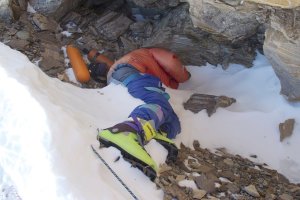
The astonishing number of bodies that have been abandoned atop Mount Everest
As India plans to retrieve the body of ‘Green Boots’, experts explain to Maroosha Muzaffar why Everest’s dead are rarely brought home. For decades, mountaineers from across the world have risked their lives to climb Mount Everest. Many succeed in reaching the summit and navigating the dangerous journey down. But a surprisingly high number do not, and their bodies remain scattered across the slopes of the world’s tallest mountain. As India plans to launch a daring mission to retrieve the body of one such climber who died on the mountain 30 years ago, experts warned that the process to bring back the dead from Everest is as arduous as the climb to summit itself. Though modern equipment and exp… |

|
Britain resisting a genocide is now treated as terrorism
At a moment when Israel and its leaders stand accused before international courts of genocide, war crimes and crimes against humanity, Britain has chosen to direct some of its most powerful legal tools not at those enabling the destruction of Gaza, but at activists protesting against it. The sentencing of the Filton 4, therefore, raises questions that extend far beyond the fate of four individuals. Whatever one’s view of their actions, the case forces Britain to confront an uncomfortable contradiction: why does opposition to Israel’s actions increasingly attract the language of extremism and terrorism, while support for those actions remains firmly within the bounds of respectable politics? … |

|
Gilgo Beach serial killer Rex Heuermann sentenced to life in prison without parole for killing 8 women over 2 decades
Rex Heuermann, the Gilgo Beach serial murderer, was sentenced to life in prison without parole, bringing an emotional finish to a decades-long murder case that tormented Long Island. Families clapped and applauded in the courtroom Wednesday when Judge Timothy Mazzei imposed the sentence. “You are disgusting — a despicable man if you are a man at all,” the judge told Heuermann. “And you are a coward.” At sentence, Heuermann was allowed to speak and declared, “I am guilty of everything that was said in this room. What I would say is meaningless.” “Are you even a little bit sorry?” “Yes,” Mazzei inquired, and Heuermann nodded and seemed to say. Heuermann’s ex-wife Asa Ellerup and their two grow… |

|
5 year old girl swept into ocean off Laguna Beach is identified and mourned
The body of a 5-year-old girl who was swept into the ocean with her family in Laguna Beach before vanishing in dangerously high surf has been recovered. The girl’s body was spotted during an aerial coastline survey about 1:30 p.m. Thursday near Christmas Cove, about a quarter of a mile away from where she was initially lost at Treasure Island Beach, the city announced in a news release. The child was later identified as Amada Mia Brown of San Bernardino, said Sgt. Lizbeth Gwisdalla of the Orange County Sheriff’s Department. Amada’s father, Aaron Brown, described his daughter as full of life and “a sweet little baby” in an interview with NBC. “She loved the beach and she wasn’t afraid of wate… |

|
Stock markets surge as Trump calls off strikes on Iran
Stock markets have surged following US President Donald Trump’s announcement that he called off planned strikes against Iran and a peace deal with Tehran is imminent. Wall Street’s benchmark S&P500 index finished nearly 1.8 percent higher on Thursday, ending a three-day streak of losses for the biggest single-day gain since April. The tech-focused Nasdaq Composite jumped 2.5 percent, while the older, blue-chip Dow Jones Industrial Average gained about 1.9 percent. The rally continued in the Asia Pacific on Friday, with markets in Japan, South Korea, Taiwan, Hong Kong, and Australia racking up gains. South Korea’s Kospi, the best-performing major index this year, surged more than 8 percent in… |

|
Daycare Worker Accused Of Assaulting Toddlers Sparks New Questions About Child Safety
WEST MELBOURNE, Florida — A Florida childcare employee is facing criminal charges after investigators say surveillance footage captured repeated acts of physical aggression against children as young as two years old inside a daycare facility. Authorities allege that multiple toddlers were struck with various objects, including a metal stapler, over a period of several days before a parent complaint triggered a closer review of classroom video recordings. According to law enforcement records, 41-year-old Latasha Mullings has been charged with 11 counts of battery and one count of assault following an investigation into incidents at Mustard Seed Kidz, a childcare center in West Melbourne. The … |

|
Gemini 3 Flash frontier intelligence built for speed
Gemini 3.5 Flash delivers intelligence that rivals large flagship models on multiple dimensions, at the speeds you have come to expect from the Flash series. It’s our strongest agentic and coding model yet, outperforming Gemini 3.1 Pro on challenging coding and agentic benchmarks like Terminal-Bench 2.1 (76.2%), GDPval-AA (1656 Elo) and MCP Atlas (83.6%), and leading in multimodal understanding (84.2% on CharXiv Reasoning). When looking at output tokens per second, it is 4 times faster than other frontier models. Gemini 3.5 Flash is the latest model with frontier intelligence built for speed that helps everyone learn, build, and plan anything — faster. Google is releasing Gemini 3 Flash, a f… |