
|
Recent Articles
| Image | Title & Summary |
|---|---|

|
The Needless Murder of Over 150 Girls in Minab Iran
We remember the small rituals that made the day feel ordinary, because ordinary is what a school is supposed to be. A braid tightened with quick fingers. A scarf adjusted in a hallway mirror. The paper smell inside a notebook when you open it too fast. The soft ache of a backpack strap on a shoulder that’s still growing. We remember the way our teachers tried to make us brave about quizzes, the way we pretended not to care and then cared anyway. We remember laughter spilling down a corridor like marbles—impossible to gather once it’s loose. We walked into Shajareh Tayyebeh believing, with the stubborn faith children are allowed to have, that a classroom is a kind of sanctuary. Not holy, not … |

|
Stanford Godmother of AI Launches Spatial Intelligence MasterClass
MasterClass, the personalized learning platform, has announced the launch of Dr. Fei-Fei Li: AI’s Future – and Yours, a class that covers the current state of AI development, its real-world applications and the role individuals can play in influencing how the technology evolves. Known as the “Godmother of AI,” Li is a Stanford professor, cofounder and CEO of World Labs and founding director of Stanford’s Human-Centered AI Institute. Her foundational research on ImageNet helped spark the deep learning revolution behind every AI product in use today. The class is available now on MasterClass, where members have unlimited access to 200+ instructors with an annual membership. The class begins wh… |

|
Forever Young
Opinion | Editorial It began not with candlelight or conversation, but with silence. After their injuries in 2018, in a Minnesota hospital ward, two patients lay unconscious, each suspended between life and death. Families kept vigil, doctors measured progress in whispers, and the world outside moved on. Then, slowly, both opened their eyes. What followed wasn’t just recovery, but the improbable intertwining of two lives that had nearly ended before they began together. Their romance between Zach Zarembinski and Isabelle Richard is extraordinary because it starts at the edge of tragedy. Comas aren’t romantic backdrops; they’re medical limbos. Survival rates vary, and recovery is often incomp… |

|
The World Is Burning Quietly While We Argue About Nothing
Letters To Editor By Alan Fitpatrik It has become strangely normal to live in a moment where the planet is warming, wars drag on without clear ends, and scientific breakthroughs quietly move forward while political arguments stay stuck in place. We are surrounded by evidence of what humans can do at their best, yet governed too often by systems that reward delay, fear, or brute control. This contrast is not abstract. It shows up in flooded neighborhoods, in families displaced by conflict, and in the widening gap between those who can afford to adapt and those who cannot. When leaders cling to power through force or deception, it is rarely the powerful who suffer first. It is the poor, the yo… |

|
Lucy is the Woman Who Rewired America
Biography Feature Lucille Desiree Ball was born in 1911 in Jamestown, New York, into circumstances that offered little illusion of permanence, and when her father died of typhoid fever before she was four, the loss did not simply register as grief but as an early lesson in instability, a condition that would follow her for decades and quietly harden her instincts. The Ball household fractured into temporary arrangements, relatives stepped in, finances tightened, emotional certainty thinned, and Lucy learned—long before she had words for it—that security was conditional and visibility could not be assumed. Her mother remarried, the family moved, and the young Lucy developed a temperament that… |

|
Two more people die while skiing in the Lake Tahoe region
There have been two additional fatalities in the Sierra Nevada, adding to the total number of fatalities that have occurred throughout the winter season. The avalanche that occurred on Castle Peak last week killed nine lives. According to the Douglas County Sheriff's Office, which arrived just before noon, the most recent deaths occurred on Friday in two "fatal ski incidents" that were unrelated to each other at the Boulder Lodge of Heavenly resort. In a press statement, the Sheriff's Office stated that paramedics from the Ski Patrol and the Tahoe Douglas Fire Protection District attempted to save the life of the subject. On the other hand, both persons were pronounced dead at the site of th… |
|
Man who stabbed author Salman Rushdie convicted of terrorism charges
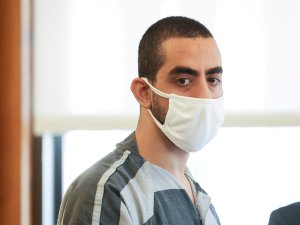
After being found guilty of federal "terrorism" charges, a man who is already serving a jail sentence in New York for attempting to assassinate novelist Salman Rushdie is now facing the risk of spending the rest of his life behind bars. A knife attack on Salman Rushdie in 2022, which took place during a public engagement in New York, led in Rushdie being half blind. Hadi Matar, who is now 28 years old, is currently serving a sentence of 25 years for his crime. In May of the previous year, Matar was given a sentence of twenty-five years in prison. A New York jury found Matar guilty on all charges, including an effort to offer material support to Hezbollah in Lebanon, after deliberating for tw… |

|
Danger Lurks In The Bedroom
Danger lingers as a senior couple lie together in an overly warm bedroom. The air does not feel oppressive, only still, the kind of warmth that settles into fabric and skin without protest. He sleeps lightly now, age having thinned the distance between rest and vigilance. She sleeps deeper — until she does not. Her seizures arrive only at night. Grand mal, sudden, violent, disorienting in their aftermath. Daytime offers no clues. Medication remains stable. Diet unchanged. Tests return the quiet ambiguity medicine often delivers: nothing obvious, nothing solved. What remains is pattern. Always sleep. Always night. He has begun noticing the temperature. Seventy-eight degrees. Comfortable, peop… |

|
The Assassination of Malcolm X
On February 21, 1965, Malcolm X woke up alone in a suite at the Hilton Hotel in New York City.He was, in the most literal sense, a guy without a home. The week before, someone had set fire to his house in the East Elmhurst neighborhood of Queens in the middle of the night. His wife, Betty Shabazz, and his four small children were all well, but for their own protection, they were currently residing with friends in a secret location.Malcolm was sure that his old coworkers from the Nation of Islam (NOI), led by Elijah Muhammad, were responsible for the firebombing. He used to be the second most influential person in the religious and political movement, but now he had to watch out for the milit… |

|
Pilot says he woke up in downtown Denver hotel to find bat in his room and bite on his foot
The alleged bat encounter now makes it difficult for the pilot to sleep in hotels, his attorney says Removed from bookmarks A commercial pilot is suing a downtown Denver hotel after a bat allegedly sunk its teeth into his foot, leaving him with a bite he claims cost him more than $100,000 in medical bills. The alleged August 2025 incident happened while the pilot was staying on the 22nd floor of the Sheraton Denver Hotel Downtown. The pilot, who has not been publicly identified because he fears professional repercussions, alleges he was awakened in the middle of the night by bats flying through his room, CBS Colorado reports. “[He] was sleeping and he woke up to a commotion, and he woke up a… |

|
President Trump Fires Attorney General Pam Bondi
President Donald Trump fired Attorney General Pam Bondi in the middle of an escalating international conflict, removing the nation’s top law enforcement authority at the exact moment legal clarity matters most. There was no transition window, no easing into change—just a sudden rupture that leaves a sharper question than the conflict itself: who is enforcing the law now, and on whose terms? A sitting president has dismissed his attorney general in the middle of an escalating international conflict. Not after resolution, not during a lull, not at the clean edge of a policy cycle—but in the thick of it, when legal clarity and institutional steadiness are not luxuries but requirements. That tim… |
|
5 year old girl swept into ocean off Laguna Beach is identified and mourned
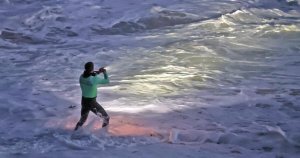
The body of a 5-year-old girl who was swept into the ocean with her family in Laguna Beach before vanishing in dangerously high surf has been recovered. The girl’s body was spotted during an aerial coastline survey about 1:30 p.m. Thursday near Christmas Cove, about a quarter of a mile away from where she was initially lost at Treasure Island Beach, the city announced in a news release. The child was later identified as Amada Mia Brown of San Bernardino, said Sgt. Lizbeth Gwisdalla of the Orange County Sheriff’s Department. Amada’s father, Aaron Brown, described his daughter as full of life and “a sweet little baby” in an interview with NBC. “She loved the beach and she wasn’t afraid of wate… |

|
US judge blocks Trumps 2bn anti weaponization fund
A United States federal judge has temporarily blocked President Donald Trump’s nearly $1.8bn “anti-weaponisation fund” to compensate victims of alleged government “lawfare”. On Friday, US District Judge Leonie Brinkema of the Eastern District of Virginia blocked the Trump administration from “taking any further action” to set up or operate the fund while she hears legal arguments. The judge, who was nominated to the bench by President Bill Clinton, scheduled a June 12 hearing about whether to extend the order blocking payouts. The Department of Justice announced the fund last week as part of an agreement to settle a lawsuit brought on behalf of Donald Trump, in his personal capacity, against… |
|
Father grieves for his teen daughter who died in devastating flood
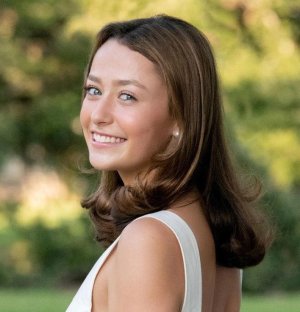
18-year-old Chloe Childress was one of the 27 kids and staff who lost their lives as a result of the floods that occurred at Camp Mystic in the previous summer. According to a recent article in New York Magazine, hChloe's father identified her battered body. She was the 18-year-old Camp Mystic counselor who was killed in the tragic flood last year. The Guadalupe River rose 20 feet in three hours due to the torrential rains that swept over Central Texas that morning on July 4th. More than 130 individuals lost their lives as the catastrophic flood destroyed structures and devastated the area. Following the tragic murders of 25 kids and two counselors, including Chloe, the century-old Christian… |

|
Audrey Hepburn Biography
Audrey Hepburn was a British actress and philanthropist who lived from 1929 until 1993. Hepburn was a big figure in Hollywood in the 1950s and 1960s. She starred in famous movies including Roman Holiday (1956), The Nun's Story (1956), and Breakfast at Tiffany's (1961). Later, Audrey Hepburn stopped acting and became a UNICEF ambassador. Audrey Hepburn was born in Belgium on May 4, 1929, to an English father and a Dutch mother. Because her father worked as an insurance salesman, the family moved a lot between England, Holland, and Belgium. Her parents split in 1935, in part because her father was a Nazi sympathizer. Audrey, who was six years old at the time, said subsequently that the divorce… |

|
How OC Innovators Are Winning the Last Mile of Artificial Intelligence
For years, the artificial intelligence conversation was dominated by a handful of technology giants investing billions into massive data centers, specialized chips and large language models. But a different story is unfolding in Orange County, where a growing wave of “AI-native” startups is proving that innovation doesn’t always require building the foundation models themselves. Instead, local entrepreneurs are focusing on what many industry observers call the “last mile” of AI: applying increasingly accessible open-source and commercial AI models to solve highly specific business problems. The result is a surge in enterprise workflow automation and industry-specific AI applications that are… |

|
ICE Murders Unarmed Woman in Minnesota
Feature Editorial An ICE agent stepped in front of a slowly moving vehicle, raised his firearm, issued a command, and then fired multiple rounds through the windshield. One of those bullets struck Renee Nicole Good in the face. She died at the scene. She was a mother of two. She was unarmed. She was not advancing. She was moving away. Everything that follows must begin there, because everything else—press statements, procedural language, institutional reflexes—exists to blur that moment until it disappears. This editorial is not about whether law enforcement work is dangerous. It is. It is not about whether officers must sometimes make split-second decisions. They do. It is not about whether… |

|
The Lost Promise of MSN News
There was a time when MSN felt like a gateway to the world. It offered curated access to reporting, a sense of connection to serious journalism, and the promise that a portal could simplify the chaos of the internet. For many readers, MSN was the homepage that greeted them each morning—a digital front page that seemed to carry authority. But that promise has been abandoned. What remains today is a hollowed-out shell of journalism, a site that has traded substance for tricks, rewrites, and endless clickbait. The decline of MSN is not just a story about one portal—it is a warning about what happens when corporate media prioritizes ad impressions over trust. The Mechanics of Decline The tactics… |

|
Foreign element caused recall of 90000 bottles of child ibuprofen
Federal regulators have ordered a nationwide recall of nearly 90,000 bottles of children’s ibuprofen after contamination was discovered in two production lots. The medicine, manufactured by Strides Pharma and distributed by Taro Pharmaceuticals, was pulled from circulation following complaints of “gel-like masses and black particles” in the liquid suspension. The Food and Drug Administration confirmed the recall earlier this month, classifying it as a Class II event—meaning the risk of serious harm is considered remote, but temporary or reversible health effects are possible. Parents are being urged to stop using the affected bottles immediately, which carry expiration dates of January 31, 2… |

|
William Shatner from Star Trek Falls From Horse With Serious Injury
William Shatner’s recent accident is more than a celebrity headline. At 94, the Star Trek legend fell from a horse, shattering his shoulder and requiring surgery. Days later, he appeared at the Saturn Awards, visibly fatigued but still commanding the stage, asking only for a chair as he accepted recognition for his contributions to science fiction. That moment, followed by his surgery, forces us to confront uncomfortable truths about aging, vitality, and society’s double standards. We celebrate youth for daring but chastise elders for the same courage. If a 30-year-old athlete falls from a horse, we call it grit. When Shatner does it, critics call it reckless. Yet risk is universal. Horses t… |