
|
Recent Articles
| Image | Title & Summary |
|---|---|
|
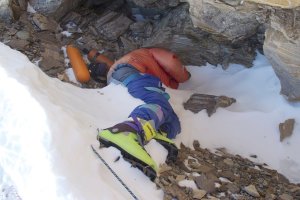
The astonishing number of bodies that have been abandoned atop Mount Everest
As India plans to retrieve the body of ‘Green Boots’, experts explain to Maroosha Muzaffar why Everest’s dead are rarely brought home. For decades, mountaineers from across the world have risked their lives to climb Mount Everest. Many succeed in reaching the summit and navigating the dangerous journey down. But a surprisingly high number do not, and their bodies remain scattered across the slopes of the world’s tallest mountain. As India plans to launch a daring mission to retrieve the body of one such climber who died on the mountain 30 years ago, experts warned that the process to bring back the dead from Everest is as arduous as the climb to summit itself. Though modern equipment and exp… |

|
Trial of Stanford students charged in 2024 pro-Palestinian protests deadlocked
The jury found the defendant guilty of vandalism by a vote of 9 to 3 and guilty of conspiracy to trespass by a vote of 8 to 4. After five days of talking about it, the jurors indicated they couldn't come to a decision. Judge Hanley Chew asked each of them if taking additional time to think would help, and they all said no. There was a mistrial in the case of five current and former Stanford University students who were prosecuted following pro-Palestinian protests in 2024, when they locked themselves inside the executive offices of the university president and provost. Chew remarked, "It looks like this jury is hopelessly deadlocked, so I'm going to declare a mistrial in counts one and two."… |

|
How to Write and Publish Science Fiction
Science fiction has always been a genre of defiance. From Mary Shelley’s Frankenstein to Octavia Butler’s Parable of the Sower, the best sci?fi stories refuse to accept the world as it is. They imagine what could be, what should be, and sometimes what must never be. Yet for the modern writer, the act of creating and publishing science fiction is itself a rebellion—against shrinking attention spans, against publishing monopolies, against the quiet pressure to write something “safe.” This is not a neutral craft. To write and publish science fiction today is to step into a contested space where art, commerce, and politics collide. 1. The Spark: Writing Against Gravity Every sci?fi story begins … |

|
AI companies accused of copyrighted infringement
Opinion | Editorial The open letter signed by Scarlett Johansson and hundreds of other creatives didn’t land because it was polite. It landed because it said the quiet part out loud: training commercial AI systems on copyrighted work without permission is theft dressed up as inevitability. The industry has spent years insisting this was a philosophical debate about progress. It isn’t. It’s a business choice—and a corrosive one. The letter, organized through the Human Artistry Campaign, rejects the soothing language that has insulated AI companies from accountability. “Learning,” “absorption,” “transformation.” These words are doing legal work, not descriptive work. They exist to blur a simpl… |

|
Michael Caine Biography
When Michael Caine led a squad of English gangsters to participate in an ambitious heist of gold from Italy in the film "Italian Job" (1969), it became another famous film of the 1960s. Later on, the film was recreated, and it became famous for the chase scenes that included Mini Coopers. Although he was born Maurice Joseph Micklewhite, he chose the stage name Michael Caine later in his career. With a voice that is distinctly associated with the working class, Michael Caine is widely considered to be one of the most famous English actors of the post-war era. He has appeared in more than one hundred films. On March 14, 1933, Michael Caine was born in Rotherhithe, which is located in London, E… |

|
The World Cup plan is merely a proposal and not an obligation
FIFA President Gianni Infantino has called the plan to sell ownership in the World Cup a proposal but said it is "not an obligation," following a significant criticism from several football authorities. FIFA this week said it planned to create a $20 billion subsidiary to run the World Cup and other events, and would sell up to 20% of the subsidiary to outside investors. The proposal was heavily criticized by the sport’s regional confederations, which said they were surprised by FIFA’s plan to incorporate commercial investors in the sport. The commercial side of the game has to grow." "It is a natural growth of the game," Mr Infantino said. “It’s part of a democratic process—a consultation pr… |

|
The Iran strikes could become a midterm reckoning for Trump and Israel
It is clear that the latest United States-Israel-Iran war stands to fundamentally reshape the politics of the Middle East. Less obvious is its immediate impact on US politics, especially the 2026 midterm elections and the durability of US support for Israel. While the core of US President Donald Trump’s base has come out in support of the joint US-Israel strikes, some influential figures on the American right have denounced them. These condemnations have heightened tensions already at play within the MAGA (Make America Great Again) base, and dovetail with conservative concerns about Israel’s influence over US foreign policy. With the midterm elections approaching, this is not a good time for… |

|
The Climate Emergency Governments Still Pretend Is Optional
GENEVA — A coalition of scientists and public health experts this week urged the World Health Organization to formally declare climate change a global public health emergency, escalating pressure on governments as new projections warn 2026 could become one of the hottest and most destructive climate years ever recorded. The demand arrives at a moment of extraordinary contradiction. Governments across Europe, North America, and Asia now openly acknowledge the dangers of climate change while simultaneously approving new fossil fuel projects, subsidizing oil and gas production, and delaying emissions targets that scientists say are already dangerously inadequate. The WHO panel’s argument was bl… |

|
Energy Realism. Physics Over Slogans
Opinion | Feature Editorial Energy Realism: Physics Over Slogans The Grid at Midnight Picture a city at midnight. The wind has calmed, solar panels are dark, and the grid leans heavily on backup power. Politicians speak of “green revolutions,” but engineers know the reality: electrons obey physics, not slogans. The global conversation about energy has become strangely unserious for something so foundational to modern life. We cling to absolutes, divide into camps, and prefer moral certainty over physical reality. The result is passion without progress. Part I: Energy as Physics, Not Branding Energy systems are not ideological constructs. They are physical networks governed by constraints: st… |

|
Woman Threatens Two Girls and Their Mother With A Gun
Two girls went to a mall with their mother. It should have been an ordinary afternoon, the kind that dissolves into memory before evening even arrives. Shopping malls are built for that kind of forgettable time. Fluorescent lights hum overhead, teenagers drift between stores, parents negotiate with children about shoes or snacks, and the world outside—politics, arguments, anger—usually stays somewhere beyond the parking lot. But on that day the ordinary rhythm broke. Somewhere along the corridor, near the cluster of clothing shops and kiosks that fill so many American malls, voices began to rise. Two families had crossed paths and something small turned sharp. Exactly what began the argument… |
|
The World Is Burning Quietly While We Argue About Nothing
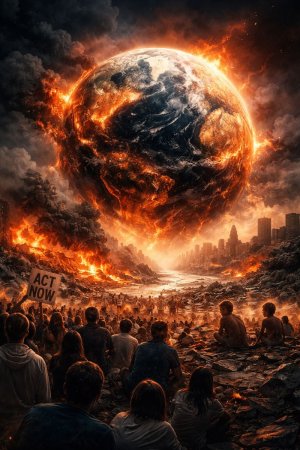
Letters To Editor By Alan Fitpatrik It has become strangely normal to live in a moment where the planet is warming, wars drag on without clear ends, and scientific breakthroughs quietly move forward while political arguments stay stuck in place. We are surrounded by evidence of what humans can do at their best, yet governed too often by systems that reward delay, fear, or brute control. This contrast is not abstract. It shows up in flooded neighborhoods, in families displaced by conflict, and in the widening gap between those who can afford to adapt and those who cannot. When leaders cling to power through force or deception, it is rarely the powerful who suffer first. It is the poor, the yo… |

|
The Quiet Bravery of the Thai Cave Rescue
In the summer of 2018, while the internet argued itself into exhaustion over everything else, twelve boys and their coach disappeared underground. They were members of the Wild Boars soccer team, ages eleven to sixteen, swallowed by rising floodwaters inside Tham Luang cave. The cave flooded fast, as it always does in monsoon season. What didn’t flood was panic—at least not in the way we’ve come to expect. The world remembers the headlines. What it forgets is the texture of the response. This was not a story driven by billionaires, brand logos, or performative outrage. It was a story powered by farmers diverting irrigation channels, monks opening temples as staging grounds, doctors calculati… |

|
Humanity Has Gone Over the Edge
Halenews Editorial Humanity has just gone over the edge of a cliff, and there may be no way back. Picture eight billion people in free fall and you begin to grasp the scale of what is now in motion. The only reason this does not feel urgent is because the catastrophe has not yet interrupted daily life. Nuclear war is no longer a distant Cold War nightmare. Reckless politics, fragile alliances, and leaders who talk about force the way bored men talk about dares have made it real again. If this goes wrong—and it can—the lights do not flicker. They go out. Satellites die. GPS disappears. Phones become paperweights. Banks freeze. Hospitals improvise. The internet, games, streaming, and social li… |

|
The Hidden Secret of AI Intelligence
Feature Editorial We have been sold a ghost in a machine, but what we actually bought was a warehouse full of heaters. When you ask an AI to read an 80,000-word manuscript in two seconds, you aren't witnessing a "mind" at work. You are witnessing a feat of industrial plumbing. There is no quiet contemplation happening in the cloud; there is only a violent, high-voltage surge of electricity through millions of silicon gates. It is a process so hot and so demanding that it requires literal tons of circulating water just to keep the hardware from melting into a puddle of useless metal. To understand why your AI assistant is brilliant one moment and a total idiot the next, you have to stop think… |

|
Hayley Mills Is Eighty And I Am Not Accepting It
Hayley Mills will turn 80 on April 18, 2026, but I reject this information on instinct. 80 years old? No way. Not in a dramatic, screaming way. In a quiet, stubborn way, like when you reread a sentence because it must be wrong. Eighty doesn’t belong to her. Eighty belongs to politicians who won’t go away. Eighty belongs to men who confuse survival with wisdom. Eighty belongs to people who feel heavy with years. It does not belong to the girl who made optimism look precise, controlled, and—most importantly—earned. I learned this in Saigon, which is calm, structured, and orderly in a way that puts most American cities to shame. There are rules here, and people follow them. There are no guns. T… |
|
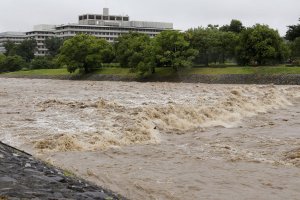
Typhoon forces Japan to evacuate over two million people while heavy rain shuts down parts of Taiwan
Authorities in Japan are evacuating more than two million people and issuing warnings for floods and landslides as Typhoon Mekhhala approaches the region. Torrential rains and strong winds from the typhoon, which is currently a tropical storm, are also battering Taiwan, forcing authorities to shut down parts of the island. Japan is bracing for at least two typhoons from the Pacific Ocean and the stronger one, Mekkhala, is expected to make landfall over the weekend, according to the national weather agency. A stationary seasonal rain front was being fed with warm and moist air, it noted, causing intense rainfall, particularly in western regions. Mekkhala was located off the coast of Okinawa’s… |
|
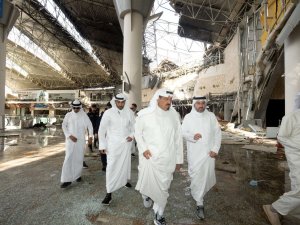
Why is Iran bombing Gulf states while avoiding US naval assets and Israel
As the United States escalates its strikes on Iran, Tehran is hitting back, targeting military and civilian infrastructure across the Gulf states and Jordan while avoiding attacks on US naval assets deployed near its coast and on Israel – a strategy that analysts say is intended to pressure US President Donald Trump without expanding the scope of the war. While Washington has struck railway stations, power facilities, telecommunications networks and drinking-water infrastructure in Iran, the Islamic Revolutionary Guard Corps (IRGC) has responded by attacking civilian airports and water and power stations in Kuwait and Bahrain. Military analysts said there’s a logic to this strategy. Targetin… |
|
At least three dead with a dozen injured in prison riot in Georgia
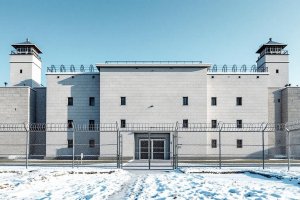
Early Sunday afternoon, Sheriff Joel Cochran told local station WRDW that several fights broke out inside the facility in Davisboro in Washington County, Georgia, which resulted in 13 inmates being taken to the hospital. The prison is located around 50 miles southeast of Augusta. While the fight was between inmates, one guard was potentially injured, according to Cochran. The Washington County Coroner confirmed two deaths had occurred initially from the fight, and a third individual died later on Sunday evening. “It’s not uncommon for these things to happen at correctional facilities; however, I think it has been quite some time since we’ve had to come to an incident this large,” Cochran sai… |

|
Nine-year-old Girl Killed After She Left Her Classroom
A Child’s Ordinary Day, Interrupted Forever On a November afternoon in Tucson, Arizona, nine-year-old Arlette Chavira left her classroom with the same joy she carried every day. She was an honor student, known for her kindness and eagerness to help. Walking with her seven-year-old sister, she headed toward her mother, who was waiting nearby. It was supposed to be routine—the kind of moment parents treasure: the daily reunion after school. Instead, a heavy rolling gate—long neglected, reportedly “busted” and awaiting repair—collapsed. It crushed Arlette in front of her sister. The gate did not fall because of chance. It fell because adults responsible for its upkeep failed to act. A lawsuit l… |

|
Hegseth says more US forces arriving in Middle East as Iran war ramps up
US Defense Secretary Pete Hegseth has said more United States forces are arriving in the Middle East, as the country’s war against Iran intensifies amid mounting concerns over the civilian toll of US-Israeli strikes. Hegseth said during a news conference at the Pentagon on Wednesday that the US-Israeli campaign against Iran was “just getting started”. “We are accelerating, not decelerating … More bombers and more fighters are arriving just today,” he told reporters, adding that the US would be using a “nearly unlimited” supply of 226kg (500lb), 453kg (1,000lb) and 900kg (2,000lb) bombs. The US and Israel, he said, would sow “death and destruction from the sky, all day long”. Hegseth’s combat… |