
|
Recent Articles
| Image | Title & Summary |
|---|---|

|
US Embassy in Baghdad attacked with missile that hits helipad
The United States Embassy in the Iraqi capital Baghdad has been hit by a missile attack that caused smoke to rise from the building. An Iraqi security source told Al Jazeera on Saturday that the attack destroyed part of its air defence system, without giving further details. A missile struck a helipad inside the US Embassy in Baghdad, two security officials told The Associated Press news agency. The projectile landed within the embassy’s boundaries in the Green Zone, the heavily fortified district in central Baghdad that houses Iraqi government institutions and foreign embassies, added the security officials, who spoke on condition of anonymity as they are not authorised to speak with the pr… |
|
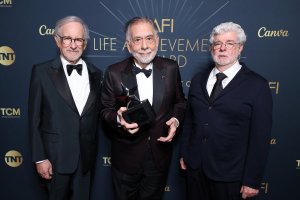
Spielberg and Coppola and Lucas is the toxic friendship that built modern Hollywood
A new book captures how Francis Ford Coppola, George Lucas and Steven Spielberg went from allies to rivals, driving a filmmaking revolution in the process. By Patrick Smith Removed from bookmarks I would like to be emailed about offers, events and updates from The Independent. Read our Privacy notice George Lucas should have died. It was 1962; the 17-year-old had just crashed his yellow Autobianchi convertible into a walnut tree, in Modesto, California. The car rolled, bounced and came to rest – it was “beyond mangled, flipped upside down and twisted like a crushed Coke can against the tree”, writes Paul Fischer in his new book, The Last Kings of Hollywood: Coppola, Lucas, Spielberg and the … |

|
Amber Glenn Shocked Over What Madonna Said About Her
The collision of elite sport and pop iconography rarely transcends the level of a well-managed PR stunt, yet the moment Amber Glenn stared into a screen to find Madonna staring back was different. It was a rupture in the sterile, high-pressure atmosphere of the Olympic village. Glenn, a 26-year-old from Plano, Texas, was already carrying the weight of a nation’s expectations and the personal history of a career defined by "almosts" and "not quites." When the Queen of Pop—the woman whose 1989 anthem "Like a Prayer" Glenn had chosen as her battle cry—spoke directly to her, the athlete’s physical composure dissolved. "I’m legitimately shaking," Glenn admitted. In that trembling, we saw the inte… |

|
Who will backdown first with the Hormuz blockade
Donald Trump said that Iran is “collapsing financially” and accused the country of losing millions of dollars a day because to Washington’s naval blockade of Iranian ports. “Iran is collapsing financially!” Trump posted Tuesday night on his Truth Social platform. They want the Strait of Hormuz opened up right away - starving for cash! $500 MILLION DOLLARS LOST A DAY. Military and police saying they are not getting paid. SOS!!!” The US embargo of Iranian ports started at 14:00 GMT on April 13. Since then, the US has fired on and captured an Iranian-flagged tanker near the Strait of Hormuz and rerouted ships in the open seas transporting goods to or from Iran. Iran's armed forces have labeled … |

|
Stock markets surge as Trump calls off strikes on Iran
Stock markets have surged following US President Donald Trump’s announcement that he called off planned strikes against Iran and a peace deal with Tehran is imminent. Wall Street’s benchmark S&P500 index finished nearly 1.8 percent higher on Thursday, ending a three-day streak of losses for the biggest single-day gain since April. The tech-focused Nasdaq Composite jumped 2.5 percent, while the older, blue-chip Dow Jones Industrial Average gained about 1.9 percent. The rally continued in the Asia Pacific on Friday, with markets in Japan, South Korea, Taiwan, Hong Kong, and Australia racking up gains. South Korea’s Kospi, the best-performing major index this year, surged more than 8 percent in… |

|
Michael Caine Biography
When Michael Caine led a squad of English gangsters to participate in an ambitious heist of gold from Italy in the film "Italian Job" (1969), it became another famous film of the 1960s. Later on, the film was recreated, and it became famous for the chase scenes that included Mini Coopers. Although he was born Maurice Joseph Micklewhite, he chose the stage name Michael Caine later in his career. With a voice that is distinctly associated with the working class, Michael Caine is widely considered to be one of the most famous English actors of the post-war era. He has appeared in more than one hundred films. On March 14, 1933, Michael Caine was born in Rotherhithe, which is located in London, E… |

|
AI companies accused of copyrighted infringement
Opinion | Editorial The open letter signed by Scarlett Johansson and hundreds of other creatives didn’t land because it was polite. It landed because it said the quiet part out loud: training commercial AI systems on copyrighted work without permission is theft dressed up as inevitability. The industry has spent years insisting this was a philosophical debate about progress. It isn’t. It’s a business choice—and a corrosive one. The letter, organized through the Human Artistry Campaign, rejects the soothing language that has insulated AI companies from accountability. “Learning,” “absorption,” “transformation.” These words are doing legal work, not descriptive work. They exist to blur a simpl… |

|
Hayley Mills Is Eighty And I Am Not Accepting It
Hayley Mills will turn 80 on April 18, 2026, but I reject this information on instinct. 80 years old? No way. Not in a dramatic, screaming way. In a quiet, stubborn way, like when you reread a sentence because it must be wrong. Eighty doesn’t belong to her. Eighty belongs to politicians who won’t go away. Eighty belongs to men who confuse survival with wisdom. Eighty belongs to people who feel heavy with years. It does not belong to the girl who made optimism look precise, controlled, and—most importantly—earned. I learned this in Saigon, which is calm, structured, and orderly in a way that puts most American cities to shame. There are rules here, and people follow them. There are no guns. T… |

|
The six subtle signs to look out for on any day
Lavish gifts, intense declarations, and constant attention, often perceived as romantic gestures on Valentine's Day, could in fact be indicators of controlling behaviour rather than genuine love, experts warn. Divorce coach Nawal Houghton identifies February as a peak season for what she describes as "too-good-to-be-true" toxic relationships. Each February, online searches related to break-ups, relationship doubts, and emotional confusion surge significantly. Experts suggest Valentine's Day frequently plays a pivotal role, often bringing uncomfortable truths to the surface for many. Rather than creating relationship problems, the day tends to expose existing emotional patterns within partner… |

|
Woman Threatens Two Girls and Their Mother With A Gun
Two girls went to a mall with their mother. It should have been an ordinary afternoon, the kind that dissolves into memory before evening even arrives. Shopping malls are built for that kind of forgettable time. Fluorescent lights hum overhead, teenagers drift between stores, parents negotiate with children about shoes or snacks, and the world outside—politics, arguments, anger—usually stays somewhere beyond the parking lot. But on that day the ordinary rhythm broke. Somewhere along the corridor, near the cluster of clothing shops and kiosks that fill so many American malls, voices began to rise. Two families had crossed paths and something small turned sharp. Exactly what began the argument… |

|
Trump calls justices fools and announces new global tariff after Supreme Court setback
This is read by an automated voice. Please report any issues or inconsistencies here. WASHINGTON — President Trump on Friday lashed out at Supreme Court justices who struck down a key part of his tariffs agenda, calling them “fools” who made a “terrible, defective decision” that he plans to circumvent by imposing new levies in a different way. In a defiant appearance at the White House, Trump told reporters that his administration will impose new tariffs by using alternative legal means. He cast the ruling as a technical, not permanent, setback for his trade policy, insisting that the “end result is going to get us more money.” The president late Friday signed an executive order imposing a n… |

|
SoCal school psychologist thought he was meeting a 13 year old but it was a sting
This is read by an automated voice. Please report any issues or inconsistencies here. A Riverside County school psychologist thought he had arranged a meeting with a 13-year-old, authorities say, but he walked into a sting operation. He now faces three charges related to child sex crimes. Paul Ryan Coleman, 46, of Yucaipa was arrested Tuesday following a three-month investigation by county authorities. Coleman, a licensed school psychologist at the Nuview Union School District, planned to meet up with someone he believed was a 13-year-old child but who was actually an undercover investigator, the county district attorney’s office said in a statement. He had exchanged hundreds of sexually exp… |

|
The World Cup plan is merely a proposal and not an obligation
FIFA President Gianni Infantino has called the plan to sell ownership in the World Cup a proposal but said it is "not an obligation," following a significant criticism from several football authorities. FIFA this week said it planned to create a $20 billion subsidiary to run the World Cup and other events, and would sell up to 20% of the subsidiary to outside investors. The proposal was heavily criticized by the sport’s regional confederations, which said they were surprised by FIFA’s plan to incorporate commercial investors in the sport. The commercial side of the game has to grow." "It is a natural growth of the game," Mr Infantino said. “It’s part of a democratic process—a consultation pr… |

|
Lucy is the Woman Who Rewired America
Biography Feature Lucille Desiree Ball was born in 1911 in Jamestown, New York, into circumstances that offered little illusion of permanence, and when her father died of typhoid fever before she was four, the loss did not simply register as grief but as an early lesson in instability, a condition that would follow her for decades and quietly harden her instincts. The Ball household fractured into temporary arrangements, relatives stepped in, finances tightened, emotional certainty thinned, and Lucy learned—long before she had words for it—that security was conditional and visibility could not be assumed. Her mother remarried, the family moved, and the young Lucy developed a temperament that… |

|
Karaoke And The Death Of Public Shame
Opinion There are few sounds more spiritually exhausting than a drunk man discovering a microphone near water. The river carries everything. That is the problem. A terrible singer inside a small bar is survivable. The walls absorb part of the damage. Alcohol softens the rest. But once speakers are dragged outdoors and pointed broadly at civilization itself, the laws of acoustics become instruments of psychological warfare. Somewhere across the dark water, usually male, usually already shouting before the music even begins, a man decides that what the entire neighborhood needs at 11:47 p.m. is his interpretation of “Sweet Caroline.” Interpretation is perhaps too generous a word. What follows … |

|
The war on Iran will likely end in American retreat
Iran can credibly impose costs that the United States cannot bear and that the world should not suffer. The US – Israel war plan was a decapitation strike, sold to President Donald Trump by Prime Minister Benjamin Netanyahu and David Barnea, the director of the Mossad. The premise was that an aggressive joint US–Israeli bombing campaign would so degrade the Iranian regime’s command structure, nuclear programme, and IRGC senior leadership that the regime would fracture. The United States and Israel would then impose a pliable government in Tehran. Trump seems to have been convinced that Iran would follow the same course as had occurred in Venezuela. The US operation in Venezuela in January 20… |

|
Trump says US will not allow Iran to reach enriched uranium
In an interview with the syndicated TV show Full Measure that aired on Sunday, Trump appeared to play down the significance of the uranium, which is believed to be buried under the rubble of nuclear facilities, remaining in Iran for now. “We’ll get that at some point, whenever we want. We have it surveilled,” Trump said. “I did a thing called Space Force, and they are watching. If somebody walked in, he could tell you his name, his address, the number of his badge … If anybody got near the place, we will know about it, and we’ll blow them up.” Iran’s highly enriched uranium is one of the major sticking points between Washington and Tehran in ceasefire negotiations to end the 10-week US-Israe… |

|
Grace Kelly Biography the Woman and the Truth
Grace Kelly was a famous American actress in the 1950s who won an Oscar. She stopped acting in 1956 after appearing in eleven movies to marry Prince Rainer of Monaco. As the Princess Consort of Monaco, she did her royal responsibilities and started a foundation to aid poor kids and promote the arts. She died in an automobile collision on September 14, 1982, at the age of 52. Grace Kelly was born in Philadelphia, Pennsylvania, on November 12, 1929. Jack Kelly, her father, was a self-made billionaire who won three gold medals in sculling in the Olympics. Jack, her father, made a lot of money running a thriving construction firm on the East Coast. Grace had a brother named John and two sisters … |

|
Iran Prepares for US Attack as It Rejects Negotiations
Iran is not dancing toward the negotiating table out of fear; it is bracing for war while refusing to yield. Reports that Tehran is preparing for a possible U.S.–Israeli missile assault, even as it dismisses offers to talk, underscore a new kind of tension: fear without capitulation. That is not weakness, and it is not readiness in the traditional sense. It is a regime calculating its own survival amid an increasingly hostile international environment. This moment looks nothing like the hope-tinged diplomacy of past nuclear talks. Then, there were back channels, envoys meeting in hotel suites, whispered negotiations and, at times, fragile progress. Now the language is public posturing, threa… |

|
US and Israel bomb Iran with talks and threats leading up to attacks
The United States and Israel have launched strikes on Iran despite ongoing talks between Washington and Tehran over Iran’s nuclear programme. Iran responded to Saturday’s attacks with missile and air strikes across the region, including in Israel, Bahrain, Saudi Arabia, Qatar, the United Arab Emirates and Iraq. Israeli officials said their strikes targeted Iran’s military and nuclear-related infrastructure, while airspace across Israel was closed and emergency measures imposed. Several other countries in the region also announced the closure of their airspace. Meanwhile, President Donald Trump said Washington has begun a “major combat operation” in Iran, aimed at “eliminating threats from th… |