
|
Recent Articles
| Image | Title & Summary |
|---|---|

|
The Epstein Files and the Machinery of Forgetting
Editorial The first instinct of power, when threatened, is not denial but delay. Delay until outrage exhausts itself, until headlines thin, until the public grows bored or distracted or numb. The newly unsealed Jeffrey Epstein-related documents land in public view with the weight of something both familiar and unfinished, a reminder not merely of a disgraced financier and the crimes that orbited him, but of how expertly the machinery of forgetting has been engineered. These files do not arrive as a revelation in the cinematic sense. There is no single smoking gun, no neat moral closure. Instead, they arrive like sediment, layer upon layer of testimony, allegation, recollection, and evasion. … |

|
Hegseth says more US forces arriving in Middle East as Iran war ramps up
US Defense Secretary Pete Hegseth has said more United States forces are arriving in the Middle East, as the country’s war against Iran intensifies amid mounting concerns over the civilian toll of US-Israeli strikes. Hegseth said during a news conference at the Pentagon on Wednesday that the US-Israeli campaign against Iran was “just getting started”. “We are accelerating, not decelerating … More bombers and more fighters are arriving just today,” he told reporters, adding that the US would be using a “nearly unlimited” supply of 226kg (500lb), 453kg (1,000lb) and 900kg (2,000lb) bombs. The US and Israel, he said, would sow “death and destruction from the sky, all day long”. Hegseth’s combat… |

|
Stock markets surge as Trump calls off strikes on Iran
Stock markets have surged following US President Donald Trump’s announcement that he called off planned strikes against Iran and a peace deal with Tehran is imminent. Wall Street’s benchmark S&P500 index finished nearly 1.8 percent higher on Thursday, ending a three-day streak of losses for the biggest single-day gain since April. The tech-focused Nasdaq Composite jumped 2.5 percent, while the older, blue-chip Dow Jones Industrial Average gained about 1.9 percent. The rally continued in the Asia Pacific on Friday, with markets in Japan, South Korea, Taiwan, Hong Kong, and Australia racking up gains. South Korea’s Kospi, the best-performing major index this year, surged more than 8 percent in… |

|
The assassination of Ayatollah Ali Khamenei will likely backfire
A favourite tactic of war is to try to decapitate the enemy leadership. While such strategies might work in certain contexts, in the Middle East, they have proven to be a disastrous choice. For sure, the assassination of an enemy leader might give a quick boost of popularity amid war. Certainly, United States President Donald Trump and Israeli Prime Minister Benjamin Netanyahu are basking in the limelight of their perceived “success” in assassinating Iranian Supreme Leader Ali Khamenei. But killing an 86-year-old man who had already been planning his succession due to his ill health is not that much of a feat considering the overwhelming firepower that the US and Israel together possess. Mor… |

|
The Lost Promise of MSN News
There was a time when MSN felt like a gateway to the world. It offered curated access to reporting, a sense of connection to serious journalism, and the promise that a portal could simplify the chaos of the internet. For many readers, MSN was the homepage that greeted them each morning—a digital front page that seemed to carry authority. But that promise has been abandoned. What remains today is a hollowed-out shell of journalism, a site that has traded substance for tricks, rewrites, and endless clickbait. The decline of MSN is not just a story about one portal—it is a warning about what happens when corporate media prioritizes ad impressions over trust. The Mechanics of Decline The tactics… |

|
Rail regulators accused of ignoring safety recommendations
More than 3,000 rail accidents, causing 23 deaths and nearly 1,200 injuries over the past decade, have been attributed to human error and track defects. Yet, federal railroad regulators have largely ignored most safety recommendations arising from these investigations, according to a new study. An analysis by the Howard Center for Investigative Journalism at the University of Maryland reveals a powerful industry behind these failures, using its influence to thwart federal safety reforms. It is accused of actively lobbying President Donald Trump’s administration to reduce track inspection and repair requirements and loosen rules aimed at preventing crew fatigue. The center’s analysis of data … |

|
Why AI firm is taking on Trump administration
A row is simmering between the United States government and Anthropic, one of the tech companies that develops artificial intelligence (AI) tools for defence and civilian uses. According to recent reports, Anthropic’s Claude software was used in a US military operation, which resulted in the abduction of Venezuelan President Nicholas Maduro in January this year. US Defense Secretary Pete Hegseth has given the company until Friday to loosen its rules about how its AI tools can be used by the Pentagon, or risk losing its government contract, The Associated Press and Reuters news agencies reported on Tuesday, quoting unnamed sources. But Anthropic is refusing to back down over safeguards which … |

|
Humanity Has Gone Over the Edge
Halenews Editorial Humanity has just gone over the edge of a cliff, and there may be no way back. Picture eight billion people in free fall and you begin to grasp the scale of what is now in motion. The only reason this does not feel urgent is because the catastrophe has not yet interrupted daily life. Nuclear war is no longer a distant Cold War nightmare. Reckless politics, fragile alliances, and leaders who talk about force the way bored men talk about dares have made it real again. If this goes wrong—and it can—the lights do not flicker. They go out. Satellites die. GPS disappears. Phones become paperweights. Banks freeze. Hospitals improvise. The internet, games, streaming, and social li… |
|
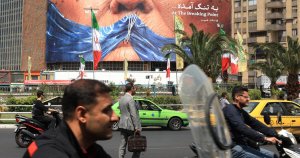
Gulf strikes stoke concerns of new conflict with Iran
Uncertainty hung over the survival of a fragile ceasefire between the United States and Iran on Monday as a new wave of strikes on the United Arab Emirates and Oman and rumors of attacks on ships in the Strait of Hormuz undercut trust in the truce. The drone and missile attacks, the first since a truce ended combat earlier in April, came after the Trump administration started a wide-scale naval operation Monday to “guide” trapped maritime vessels out of the critical channel. However, concerns of a resumption of warfare have sparked yet another rise in the price of oil, which has shot up to above $114 a barrel, a level not seen since the truce over a month ago. The Gulf has trapped hundreds o… |

|
A Big Win For A Lonely Woman
Human Interest Opinion / Perspective For forty years, a stoneware crock sat on a porch in New York, a silent sentry against the biting winters and the humid, heavy summers of the Northeast. It was, for all intents and purposes, a piece of lawn debris. It held no flowers; it served no function. To the woman who lived behind the screen door, it was simply "there"—a familiar shape in a life that had slowly become a series of familiar, quiet shapes. When her birthday approached, she looked at the heavy salt-glazed vessel and allowed herself a modest, almost apologetic hope: perhaps it was worth a hundred dollars. A hundred dollars for a birthday treat, or perhaps a utility bill, or just the smal… |
|
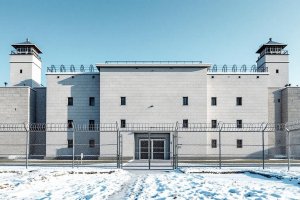
At least three dead with a dozen injured in prison riot in Georgia
Early Sunday afternoon, Sheriff Joel Cochran told local station WRDW that several fights broke out inside the facility in Davisboro in Washington County, Georgia, which resulted in 13 inmates being taken to the hospital. The prison is located around 50 miles southeast of Augusta. While the fight was between inmates, one guard was potentially injured, according to Cochran. The Washington County Coroner confirmed two deaths had occurred initially from the fight, and a third individual died later on Sunday evening. “It’s not uncommon for these things to happen at correctional facilities; however, I think it has been quite some time since we’ve had to come to an incident this large,” Cochran sai… |

|
Woman Threatens Two Girls and Their Mother With A Gun
Two girls went to a mall with their mother. It should have been an ordinary afternoon, the kind that dissolves into memory before evening even arrives. Shopping malls are built for that kind of forgettable time. Fluorescent lights hum overhead, teenagers drift between stores, parents negotiate with children about shoes or snacks, and the world outside—politics, arguments, anger—usually stays somewhere beyond the parking lot. But on that day the ordinary rhythm broke. Somewhere along the corridor, near the cluster of clothing shops and kiosks that fill so many American malls, voices began to rise. Two families had crossed paths and something small turned sharp. Exactly what began the argument… |

|
Amber Glenn Shocked Over What Madonna Said About Her
The collision of elite sport and pop iconography rarely transcends the level of a well-managed PR stunt, yet the moment Amber Glenn stared into a screen to find Madonna staring back was different. It was a rupture in the sterile, high-pressure atmosphere of the Olympic village. Glenn, a 26-year-old from Plano, Texas, was already carrying the weight of a nation’s expectations and the personal history of a career defined by "almosts" and "not quites." When the Queen of Pop—the woman whose 1989 anthem "Like a Prayer" Glenn had chosen as her battle cry—spoke directly to her, the athlete’s physical composure dissolved. "I’m legitimately shaking," Glenn admitted. In that trembling, we saw the inte… |
|
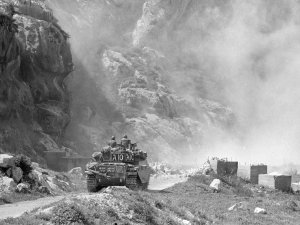
Winning peace in Lebanon is harder than winning war
But a symbolic meeting would not be enough to resolve the conflict in Lebanon, which has deep historical roots and a wide geopolitical reach. Despite the ceasefire, Israel continues to occupy parts of southern Lebanon. The aim of the ongoing operation, as declared by Defense Minister Israel Katz, is to establish a “security zone” over the entire area south of the Litani River – which represents 10 percent of Lebanon’s national territory. The civilian population has been barred from returning to their homes while Israeli forces have continued bombing and mass demolition. Netanyahu appears to be using the narrative of “destroying Hezbollah” to cover up what is really a campaign of mass destruc… |
|
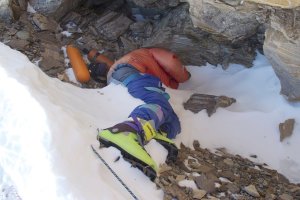
The astonishing number of bodies that have been abandoned atop Mount Everest
As India plans to retrieve the body of ‘Green Boots’, experts explain to Maroosha Muzaffar why Everest’s dead are rarely brought home. For decades, mountaineers from across the world have risked their lives to climb Mount Everest. Many succeed in reaching the summit and navigating the dangerous journey down. But a surprisingly high number do not, and their bodies remain scattered across the slopes of the world’s tallest mountain. As India plans to launch a daring mission to retrieve the body of one such climber who died on the mountain 30 years ago, experts warned that the process to bring back the dead from Everest is as arduous as the climb to summit itself. Though modern equipment and exp… |

|
A timeline of British royal sagas and scandals down the decades
Former British prince Andrew Mountbatten-Windsor, brother of the United Kingdom’s King Charles II, was released by police on Thursday after being arrested and held for several hours on suspicion of misconduct in public office over his links to convicted late American sex offender Jeffrey Epstein. Mountbatten-Windsor, who turned 66 the day of his arrest, is the first British royal in more than 350 years to be arrested and held in police custody – the last one was King Charles I, who was arrested by parliamentary forces in 1647 and put on trial for high treason. His princely title was revoked last year over his links to Epstein and allegations that the two men sexually abused Virginia Giuffre … |

|
Audrey Hepburn Biography
Audrey Hepburn was a British actress and philanthropist who lived from 1929 until 1993. Hepburn was a big figure in Hollywood in the 1950s and 1960s. She starred in famous movies including Roman Holiday (1956), The Nun's Story (1956), and Breakfast at Tiffany's (1961). Later, Audrey Hepburn stopped acting and became a UNICEF ambassador. Audrey Hepburn was born in Belgium on May 4, 1929, to an English father and a Dutch mother. Because her father worked as an insurance salesman, the family moved a lot between England, Holland, and Belgium. Her parents split in 1935, in part because her father was a Nazi sympathizer. Audrey, who was six years old at the time, said subsequently that the divorce… |

|
The Assassination of Malcolm X
On February 21, 1965, Malcolm X woke up alone in a suite at the Hilton Hotel in New York City.He was, in the most literal sense, a guy without a home. The week before, someone had set fire to his house in the East Elmhurst neighborhood of Queens in the middle of the night. His wife, Betty Shabazz, and his four small children were all well, but for their own protection, they were currently residing with friends in a secret location.Malcolm was sure that his old coworkers from the Nation of Islam (NOI), led by Elijah Muhammad, were responsible for the firebombing. He used to be the second most influential person in the religious and political movement, but now he had to watch out for the milit… |
|
The Climate Emergency Governments Still Pretend Is Optional
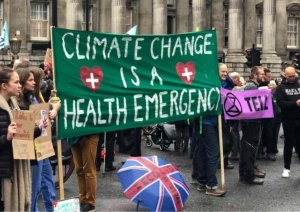
GENEVA — A coalition of scientists and public health experts this week urged the World Health Organization to formally declare climate change a global public health emergency, escalating pressure on governments as new projections warn 2026 could become one of the hottest and most destructive climate years ever recorded. The demand arrives at a moment of extraordinary contradiction. Governments across Europe, North America, and Asia now openly acknowledge the dangers of climate change while simultaneously approving new fossil fuel projects, subsidizing oil and gas production, and delaying emissions targets that scientists say are already dangerously inadequate. The WHO panel’s argument was bl… |

|
Catherine OHara as The Girl Who Became Our Comic Conscience
Catherine O’Hara stunned the world when she chose to walk away from Saturday Night Live. It was an incredible opportunity, one that could launch a career overnight, but she declined it. The stakes were high—she risked fading into obscurity before anyone recognized her name—yet that choice demonstrated her determination to forge her own path. She grew up in Toronto, the youngest in a large family, surrounded by the noise and warmth of siblings who never let her fade into the background. Catherine was quick to laugh, quicker to make others laugh, and she discovered early that humor was her way of connecting. She would mimic voices, invent characters, and turn ordinary afternoons into small per… |